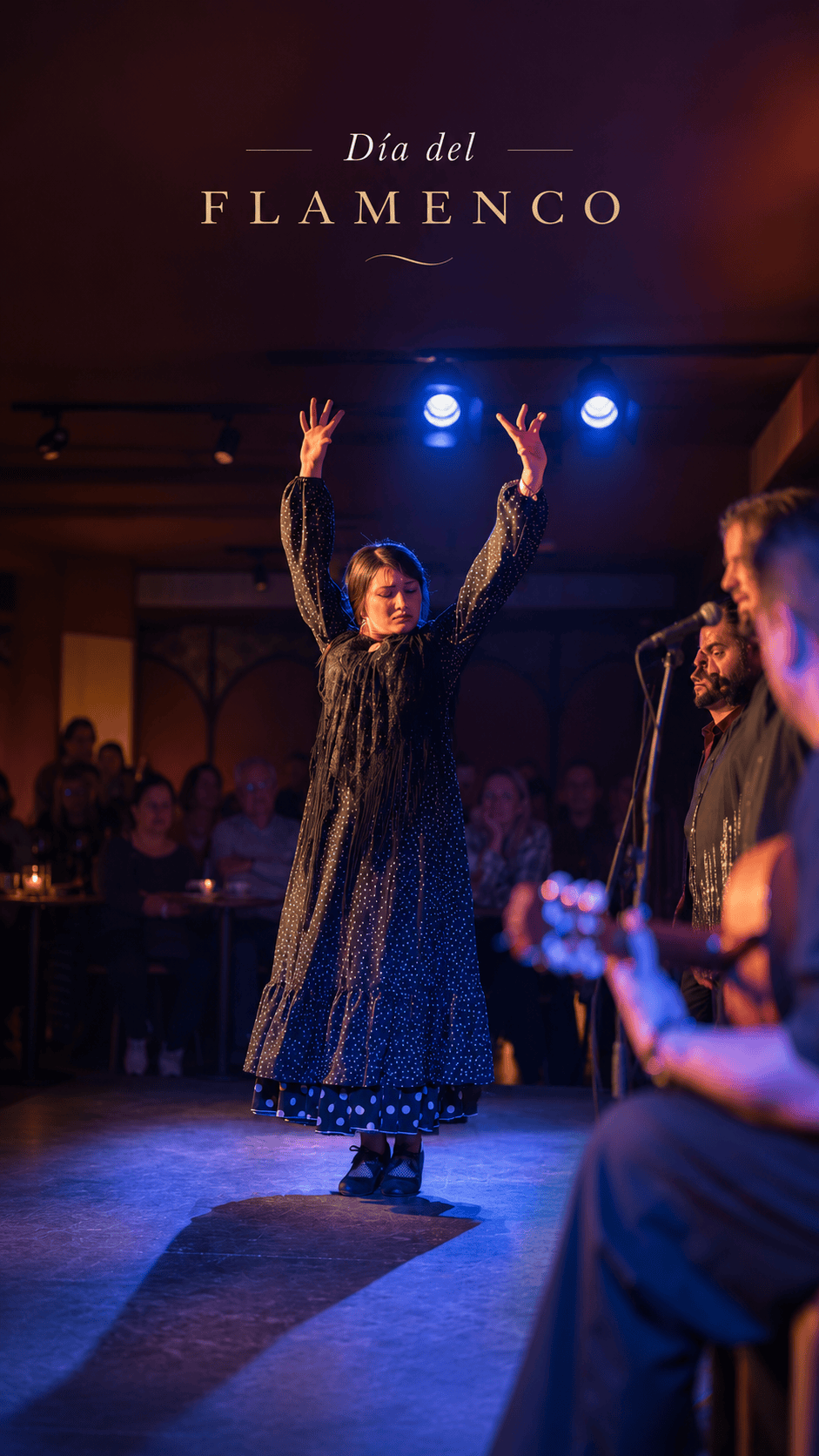
On 16 November we celebrate an art recognised as Intangible Cultural Heritage of Humanity. Discover its origins, why this date is commemorated and some ideas for enjoying Flamenco Day in 2026.
Flamenco Day: what it is, when it is celebrated and what to do
Flamenco Day falls on 16 November. It is a date to celebrate an art that was born in Andalusia, conquered stages all over the world and was recognised by UNESCO as Intangible Cultural Heritage of Humanity.
Every year, this day invites people to discover flamenco, explore its roots and enjoy an artistic expression that continues to move people of all ages and backgrounds. Whether you are a true aficionado or have never been to a show, there are many ways to join the celebration.
What is International Flamenco Day?
International Flamenco Day is the day dedicated to celebrating and spreading this art. Since flamenco was recognised as cultural heritage by UNESCO, the day has been marked in schools, theatres and streets with the aim of honouring an art that continues to be passed down from generation to generation. That is why every 16 November cities all over Spain hold events to commemorate it. It is also known as World Flamenco Day or simply Flamenco Day; all these names refer to the same celebration.
It is an opportunity to recognise the cultural value of cante (singing), baile (dance) and toque (guitar), as well as the work of the artists, families, peñas and venues that keep this tradition alive.
When is Flamenco Day?
Flamenco Day is celebrated every year on 16 November, whatever day of the week it falls on.
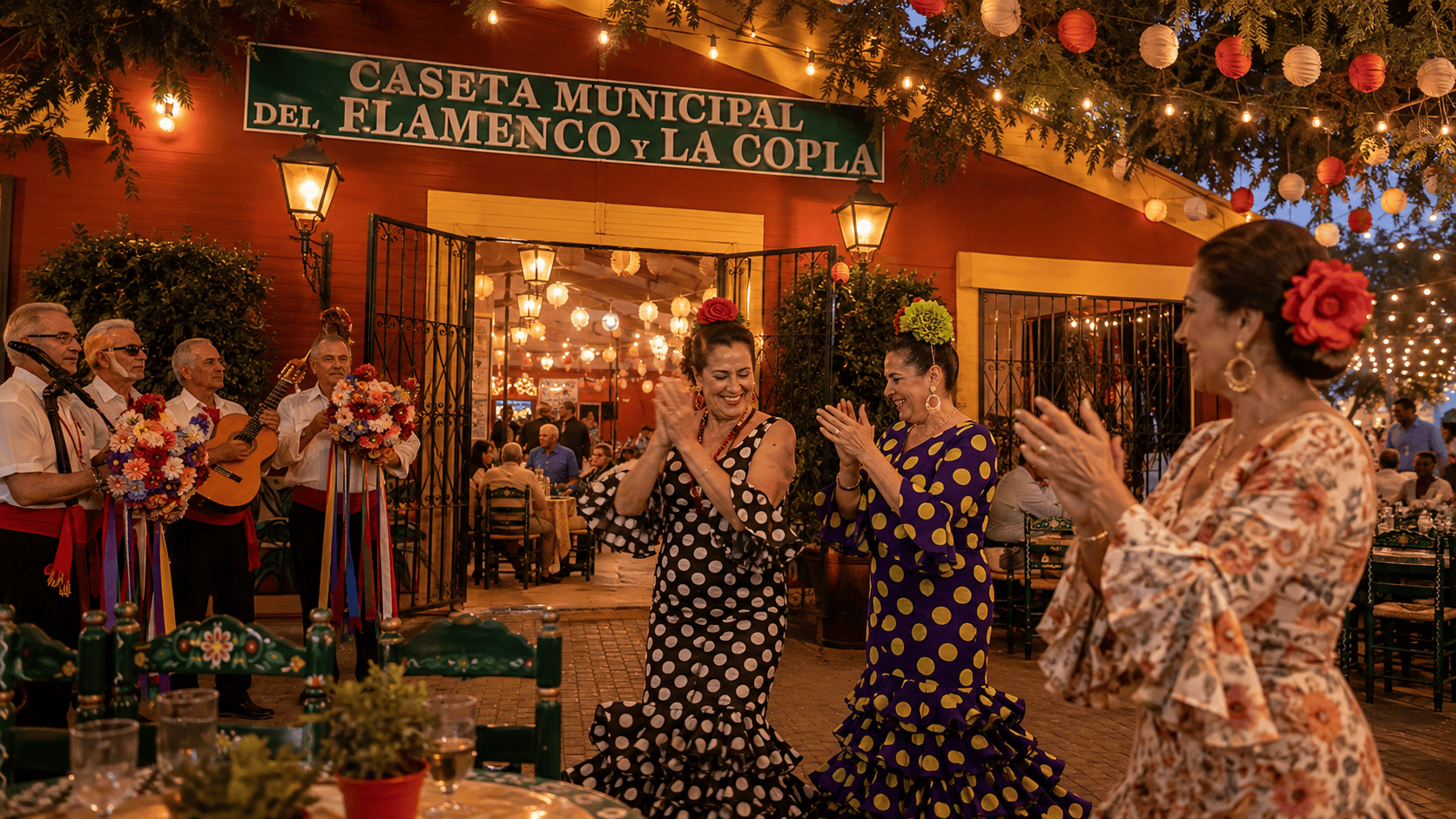
In Andalusia it is celebrated with cultural activities, shows, gatherings and educational initiatives that bring flamenco closer to audiences of all generations. It is a good idea to check the official websites of local councils to find out about the planned activities.
Why is it celebrated on 16 November?
On 16 November 2010, during a meeting of the UNESCO Intergovernmental Committee held in Nairobi (Kenya), flamenco was inscribed on the Representative List of the Intangible Cultural Heritage of Humanity.
The nomination was promoted by Andalusia, with the agreement of Extremadura and the Region of Murcia and the backing of the Spanish Government.
This recognition highlighted flamenco not only as an artistic expression but also as a cultural tradition handed down from generation to generation. UNESCO underlined its musical richness, the diversity of its styles, its social dimension and the role of the communities that preserve and pass it on.
2026 marks 16 years since that proclamation, which gave a major boost to the protection and international promotion of flamenco.
If you would like to learn more about how it has evolved, you can read our article on the history of flamenco.
Where does flamenco come from?
Flamenco has its roots in Andalusia and is the result of a long process of cultural encounters and exchanges. Its formation is linked to the musical traditions of the south of the Iberian Peninsula and to the contributions of different communities, including the Roma (gitano) community, which has played a fundamental role in its development.
Although its origins go back further, it was especially during the 18th and 19th centuries that flamenco began to take shape and gain popularity. It moved from family gatherings and popular settings to the cafés cantantes, the stage and, later on, the flamenco tablaos.
Its artistic language is built around three essential elements:
- Cante (singing): the voice, the expression and the depth of feeling. Cante jondo stands out as one of the most intense forms of flamenco. Discover what cante jondo is.
- Toque (guitar): the flamenco guitar, which accompanies and converses with the singing and gives each performance its own musical personality.
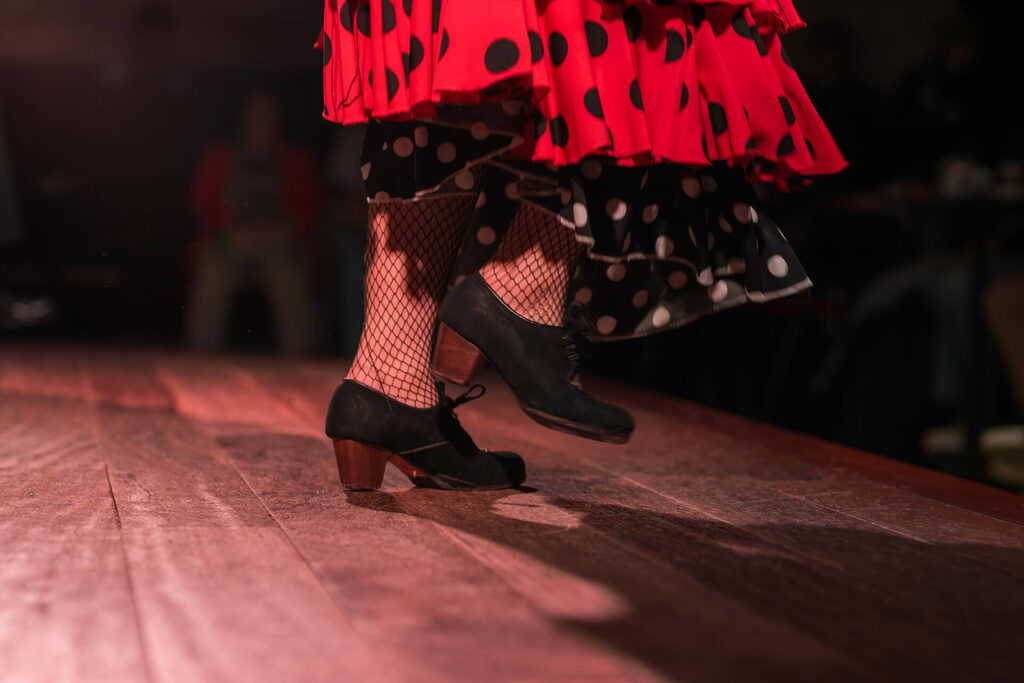
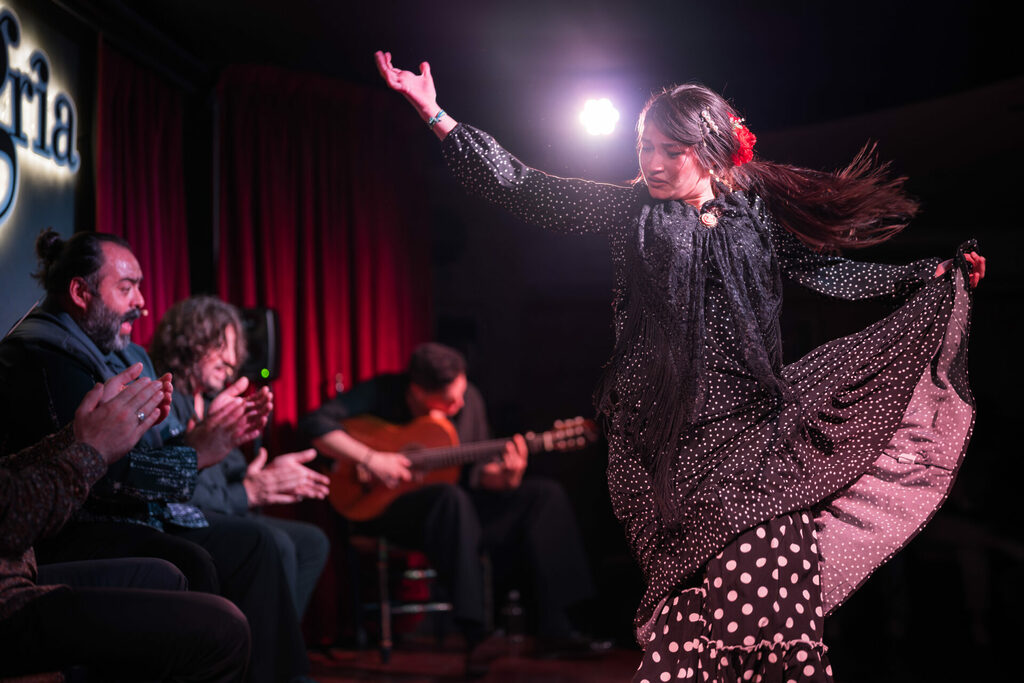
- Baile (dance): a form of bodily expression in which movement, braceo (arm work), zapateado (footwork) and compás (rhythm) tell stories without the need for words.
Málaga’s signature: the malagueña
Málaga has also brought its own personality to this musical universe. The malagueña is one of the flamenco palos (styles) linked to our land, a form of cante with great melodic and expressive richness, traditionally performed without dance. Find out more about malagueñas.
Where is Flamenco Day celebrated?
Although Andalusia is its main point of reference, Flamenco Day is celebrated far beyond its borders. Dance schools, conservatories, peñas flamencas, theatres and cultural institutions all over Spain organise activities to bring this art to new audiences.
It is also commemorated in other countries with concerts, gatherings, classes and shows organised by cultural centres and Instituto Cervantes branches.
And in Málaga?
Málaga has a long flamenco tradition and venues that work all year round to preserve and spread this heritage. One interesting visit is the Peña Juan Breva, home to the oldest Flamenco Art Museum in Spain, with a collection of more than 5,000 items related to this art. It is usually open to visitors Monday to Saturday, from 10:00 to 14:00.
In addition, the official programme for Flamenco Day in Andalusia 2026 includes several events in the province:
- 15 November: Manuel Liñán presents Amor, amado, amén at the Palacio de la Aduana in Málaga, at 12:00. Free admission until full capacity.
- 18 November: José Valencia presents Con jerarquía at the Teatro Cánovas, at 20:00.
- 13 November: performance by Paqui Ríos at the Peña Flamenca El Piyayo, in Rincón de la Victoria.
- 14 November: performance by the dancer Raúl Alba at the Peña Flamenca del Sur, in Mijas Costa.
- 15 November: performance by Mari Ángeles Fernández at the Peña Unión Flamenca Alhaurina, in Alhaurín el Grande.
The programme continues over the following weeks in different towns across the province. You can check the activities and any updates in the official agenda of the Junta de Andalucía (in Spanish).
Ideas for celebrating Flamenco Day
You don’t need to be a flamenco expert to enjoy this day. What matters is getting closer to flamenco, discovering something new and letting yourself be surprised. Here are some ideas for celebrating Flamenco Day in a different way.
Go to a live show
It is one of the best ways to understand the power of flamenco. Seeing the artists on stage lets you appreciate the dialogue between singing, dance and guitar, and discover the emotion and improvisation that make every show unique. You can check our programme of flamenco shows in Málaga and find out how to choose a good flamenco show.
Discover the great guitarists
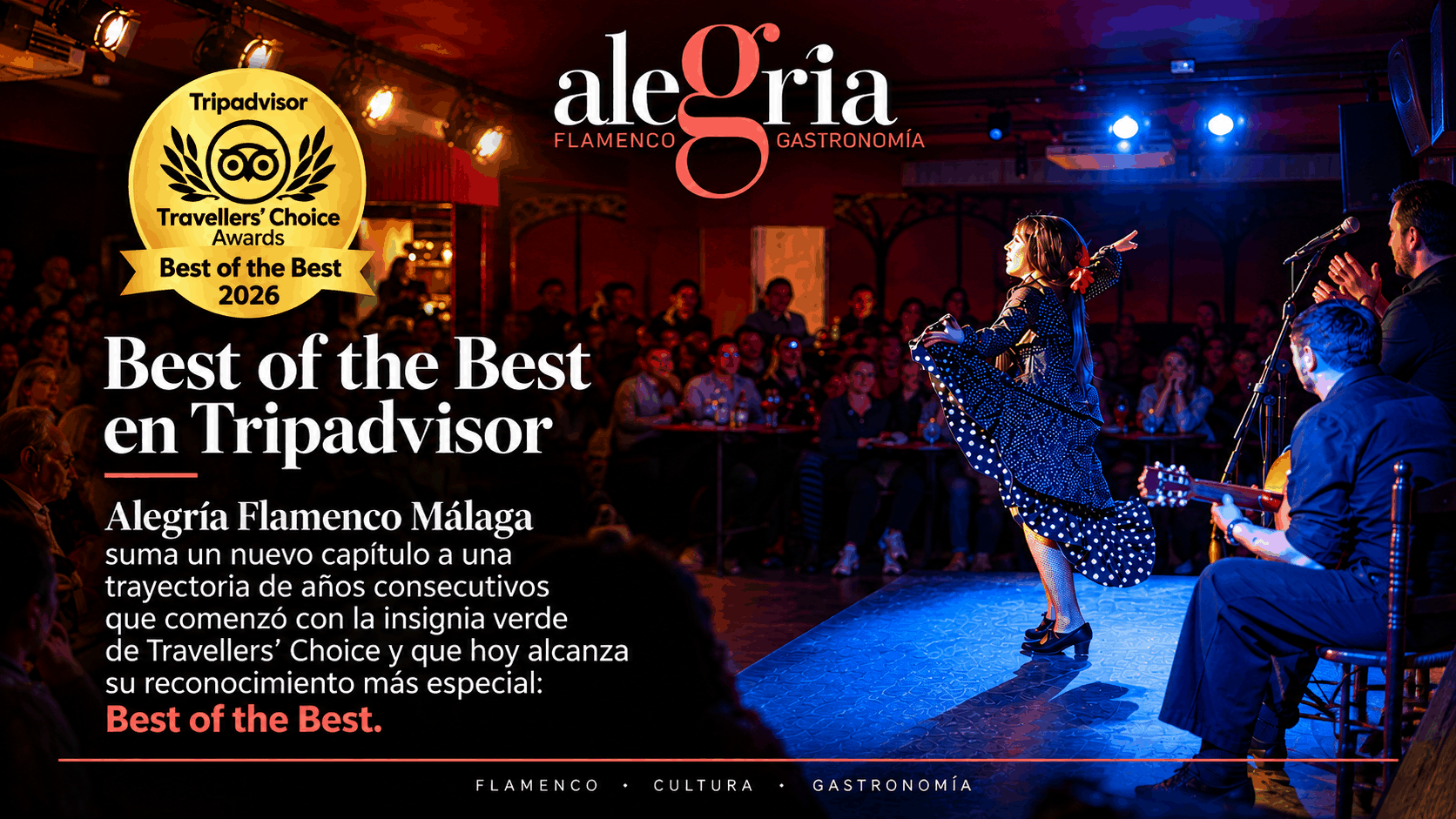
The flamenco guitar deserves a celebration of its own; in fact, it has its own festivals. Listening to its great performers is a way to discover the musical richness of this genre, from the most traditional sounds to contemporary approaches. You can start with our overview of the best flamenco guitarists and get to know some of the Andalusian flamenco artists who have helped take this art around the world. Some of them regularly perform in flamenco theatres such as Alegría, which makes it a great way to discover them.
Learn to do palmas (handclaps)
Palmas are much more than accompaniment: they are an essential part of the compás. There are palmas sordas, with a more muted sound, and palmas claras, which are brighter and louder. Learning to tell them apart and knowing when to join in helps you better understand the rhythm of each palo. But remember that listening is also part of flamenco: it is not always necessary to clap along. Discover the different types of flamenco palmas.
Give flamenco as a gift
Experience gifts are increasingly popular, and Flamenco Day can be the perfect excuse to surprise someone with a cultural experience. Giving a show is giving a different kind of evening, full of shared emotions and the memory of an encounter with art. At Alegría you can give a flamenco show as a gift and turn the celebration into a special gesture.
Tips for enjoying International Flamenco Day
If you are going to see a show or take part in an activity, these small tips will help you make the most of the experience:
- Book in advance. 16 November and the days around it tend to be packed with activities and higher demand. If you have a show in mind, it is best to plan ahead.
- Listen to a few palos before you go. Getting familiar with a soleá, some alegrías or a bulería will help you recognise their different rhythms and nuances.
- Learn when to say “olé”. Jaleo is part of the communication between artists and audience, but it has its moment. Find out what flamenco jaleo is.
- Pay attention to the braceo. The hands and arms tell as much as the feet. Watch their movements and how they accompany the expression of each dancer. Learn about flamenco braceo.
- Enjoy it without needing to understand everything. You don’t need to know every palo or master the compás. Let yourself be carried away by the music and the emotions.
- Complete the experience. Combine the show with dinner, a stroll around the city or another plan to turn Flamenco Day into a special night.
How we celebrate Flamenco Day at Alegría
At Alegría we believe the best way to celebrate flamenco is to live it. That is why we open our doors every day to share it with visitors and aficionados from all over the world.
We have two theatre rooms designed so you can enjoy every detail of the show, an artistic programme that changes every week and a privileged location next to La Malagueta, very close to Muelle Uno and the Centre Pompidou. Our terrace also offers special views of this cultural area of Málaga.
On Flamenco Day you can enjoy our sessions at 18:00, 20:00 and 22:30, with 60-minute shows. And if you want to round off the experience, you can pair it with lunch or dinner.
You can also choose from our experience packs, which combine flamenco with options such as a tuk tuk tour or a boat trip.
And so you can plan your visit with peace of mind, we offer free cancellation up to 24 hours in advance. This 16 November, celebrate Flamenco Day with us.
Book your experience at Alegría Flamenco Málaga
Frequently asked questions about Flamenco Day
Who declared flamenco Heritage of Humanity?
UNESCO declared flamenco Intangible Cultural Heritage of Humanity on 16 November 2010, during a meeting held in Nairobi, Kenya. The nomination was promoted by Andalusia, with the agreement of Extremadura and the Region of Murcia and the backing of the Spanish Government.
Is Flamenco Day a public holiday?
No. 16 November is not a public or national holiday. It is a commemorative day dedicated to recognising and spreading flamenco as Intangible Cultural Heritage of Humanity. In Andalusia it is celebrated with shows, educational activities, gatherings and cultural events.
What are the best-known flamenco palos?
Among the best-known palos are the soleá, the bulería, the alegrías, the tangos and the fandangos. Styles from particular areas also stand out, such as the malagueña, linked to Málaga’s musical tradition. Each palo has its own compás, character and form of expression.
Do you need to know about flamenco to celebrate it?
Not at all. Flamenco Day is open to everyone, both aficionados who know its different styles and those who are discovering it for the first time. All it takes is going to a show, listening, watching and letting yourself be carried away, respectfully, by the power and emotion of this art.
What can I wear that day without buying a flamenco dress?
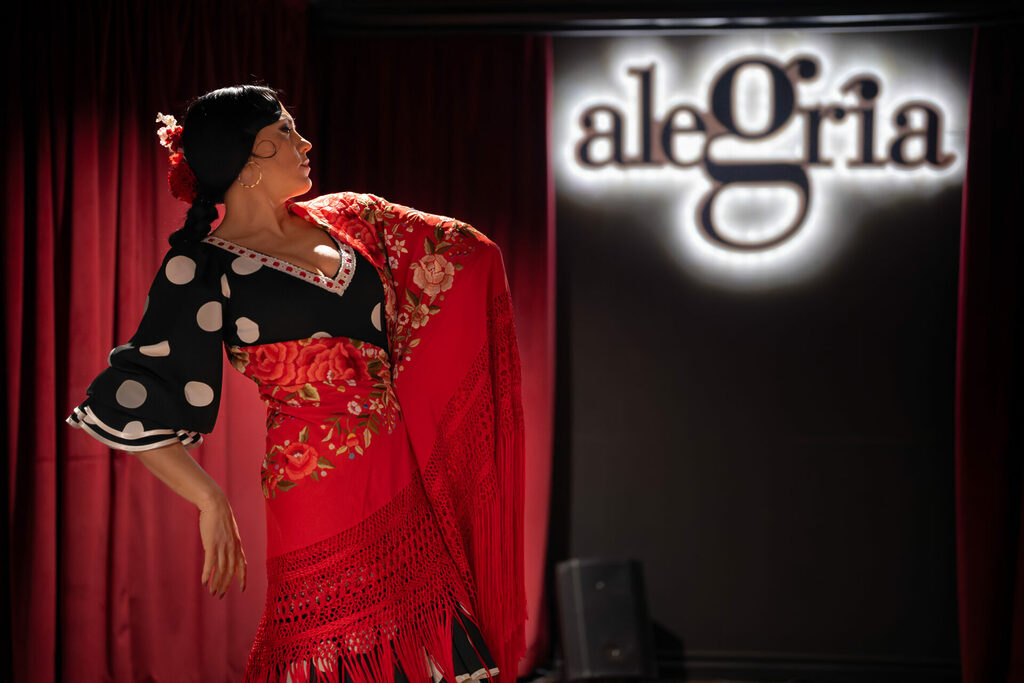
The best idea is to use accessories such as flowers, the typical earrings worn by flamenco dancers, or you can simply wear a mantón (embroidered shawl), which adds an elegant touch to any outfit.